ierre-Emerick Aubameyang has always been a striker who defies easy categorization. His pace is blistering。his finishing often clinical, yet his career has been a rollercoaster of soaring highs and puzzling lows. When he joined Arsenal in January 2018 for a then-club-record fee, he arrived with a reputation as one of Europe's most lethal marksmen. Aubameyang delivered immediately, scoring on his debut against Everton and finishing the season with 10 goals in 13 Premier League starts. That instant impact wasn't a fluke;it was a statement. Here was a forward who could turn a half-chance into a goal, whose movement in the box was sharp and whose acceleration left defenders grasping at air. His partnership with Alexandre Lacazette and later Nicolas Pépé hinted at a formidable attacking trident, but inconsistency lurked beneath the surface.What makes Aubameyang so fascinating—and so frustrating—is the gap between his obvious talent and the turbulence that has followed him. At Borussia Dortmund, he was prolific, scoring 141 goals in 213 appearances and winning the Bundesliga's Player of the Season award in 2016. Yet his tenure was also marked by disciplinary issues。including a suspension for missing a team meeting. That pattern resurfaced at Arsenal. Despite winning the Premier League Golden Boot in 2019 and signing a lucrative contract extension, his form dipped dramatically. Mikel Arteta stripped him of the captaincy in December 2021 following a disciplinary breach, and he was frozen out before joining Barcelona. The contrast is stark: a player capable of hat-tricks in Europa League semi-finals, yet equally capable of disappearing in crucial league matches. Aubameyang's game is built on instinct and speed, but when those attributes fade—even briefly—his contribution can plummet.His move to Chelsea in September 2022 felt like a last-chance saloon. The Blues needed a striker, and Aubameyang offered a proven pedigree. But the fit was wrong from the start. Chelsea's chaotic season, combined with his own injury troubles。
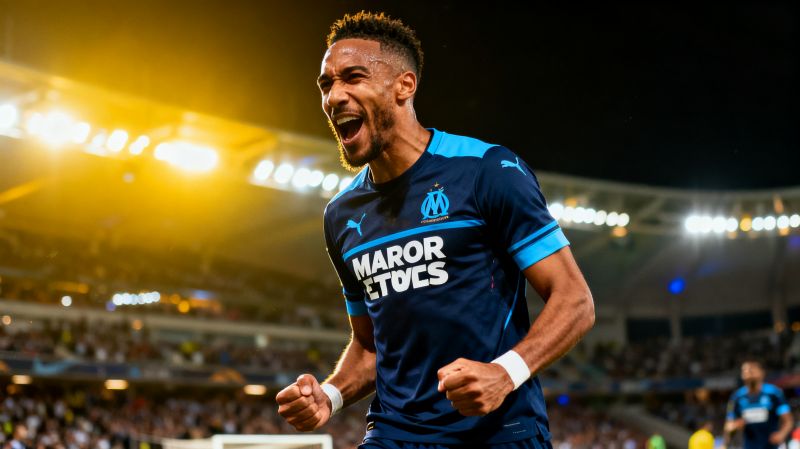
limited him to just six Premier League starts. He scored once. By January 2023, he was out of the squad entirely, and a loan move to Marseille followed. In France, he found a revival of sorts, scoring 30 goals in 51 appearances across all competitions and helping Marseille reach the Europa League semi-finals. That spell reminded everyone of what Aubameyang can do when given regular minutes and trust. His hat-trick against Ajax in the Europa League was a masterclass in poaching—two close-range finishes and a composed penalty. It was vintage Aubameyang: explosive, decisive, unplayable.The lesson from Aubameyang's career is that he is not a system player. He thrives on freedom and quick service, not on rigid tactical structures that demand constant pressing and link-up play. At Arsenal under Unai Emery, he had that freedom;
under Arteta's more disciplined approach, he struggled. At Marseille, Igor Tudor's direct style suited him perfectly. This adaptability—or lack thereof—explains his erratic output. Aubameyang isn't a player you build a team around;he's a finisher who needs the right ecosystem. His time at Chelsea proved that when the environment is toxic or the tactics are misaligned。his effectiveness collapses. But when everything clicks, he remains one of the most devastating strikers in the game. The 2023-24 season with Marseille was a reminder: give Aubameyang a defined role, a steady supply line, and a manager who believes in him, and he will score goals. Ignore those conditions, and you get the Arsenal farewell—a talented forward isolated and disillusioned.Now, as Aubameyang enters the twilight of his career, his legacy is secure but complicated. He is Gabon's all-time top scorer, a national icon who has carried his country's hopes for over a decade. At club level, he has won trophies—the FA Cup with Arsenal, the DFB-Pokal with Dortmund—but never quite silenced the skeptics. His speed remains a weapon, though it's no longer the overwhelming advantage it once was. What hasn't changed is his instinct in the box: that split-second awareness to find space, to anticipate a rebound, to finish with either foot. For all the drama and discipline issues, Aubameyang's pure goalscoring record speaks for itself. He has scored over 300 career goals, a testament to his enduring quality. The question now is whether he can find one more stable home。one more season of consistent output. If history is any guide, it will be unpredictable—but never boring. And that, perhaps, is the most honest way to describe Aubameyang: a player who keeps you guessing, for better or worse.